
Red Lion casino Plinko
Introduction
When I look at Red lion casino Plinko, I see a format that strips gambling down to one very clear idea: you drop a ball, it bounces through a field of pegs, and it lands in a payout slot with a specific multiplier. On the surface, that sounds almost too simple to deserve a serious breakdown. In practice, Plinko is one of those best Red Lion Casino games page for UK players that reveals more depth the longer you watch how it behaves over a real session.
That is exactly why the format has become so noticeable across modern gambling platforms, including Red lion casino. It is fast, visually easy to follow, and far more dependent on risk settings than many first-time players expect. Unlike a classic slot, where most of the structure is hidden behind reels, paylines, symbols, and bonus rounds, Plinko puts the core event in front of you. You can literally watch the path that leads to the result. That transparency is part of the appeal, but it can also be misleading if a player assumes visible movement means visible control.
In this article, I will focus strictly on the Plinko game at Red lion casino: what it is, how the logic works, what the pace feels like in real use, where the risk sits, and what kind of player is likely to enjoy it. My aim is not to sell the game, but to explain what it actually offers and what it demands from the person pressing the drop button.
What Red lion casino Plinko actually is and why players notice it so quickly
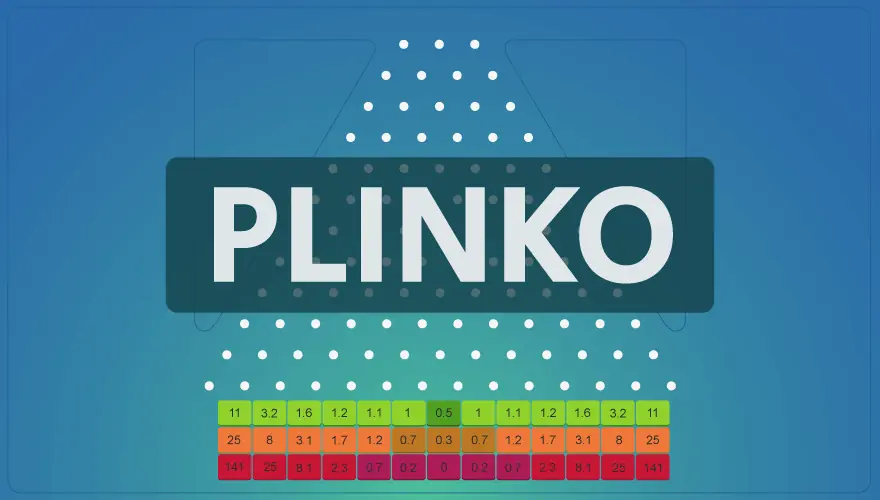
Plinko is a chance-based casino game built around a vertical board filled with pegs. A ball is released from the top, collides with pegs on the way down, and eventually lands in one of several slots at the bottom. Each slot corresponds to a multiplier. The central slots usually return smaller values, while the outer edges tend to carry the larger multipliers.
That basic structure explains why Red lion casino Plinko gets attention so quickly. The game is readable within seconds. A new player does not need to learn paylines, card rankings, side bets, or bonus symbols. The interface is often minimal: bet amount, number of rows, risk level, auto-play options, and the board itself. This low entry barrier matters. Many casino games are easy to start but slow to understand. Plinko is the opposite. It is easy to start and easy to understand visually, but its session behaviour can still surprise people.
Another reason it stands out is the tension between simplicity and expectation. The board looks playful, almost harmless. Yet the outcomes can swing sharply depending on the selected settings. That contrast is one of the most important things to understand before playing. A calm-looking interface does not mean calm bankroll behaviour.
I would also point out a practical detail that often gets overlooked: Plinko gives players an unusually direct sense of event-by-event involvement. In slots, the spin resolves as a package. In Plinko, the journey of the ball becomes part of the experience. Even though the outcome is still determined by the game logic and randomisation, the visible descent creates a stronger feeling of suspense than many low-complexity casino games manage to deliver.
How the Plinko board works in practice
To understand Red lion casino Plinko, it helps to break the round into its real components rather than treating it as a novelty drop game.
- You choose a stake. This defines the base cost of each drop.
- You set the board conditions. Depending on the version, this may include the number of rows and a low, medium, or high risk mode.
- You release the ball. The ball travels through the peg grid and changes direction repeatedly.
- The ball lands in a multiplier slot. Your return is the stake multiplied by the value of the final slot.
That sequence is short, but the settings matter a lot. The number of rows affects the shape of the payout distribution. More rows generally mean a longer path and a wider spread of possible landing positions. The risk level changes how the multiplier map is structured. On lower settings, the board tends to offer more moderate outcomes and fewer extreme values. On higher settings, the center may become less rewarding while the edges carry much larger multipliers, which also means they are hit less often.
This is where Plinko becomes more than a visual toy. The board is effectively a payout model. What you choose before the drop changes the character of the session. A low-risk setup can produce frequent small returns that keep the balance moving steadily. A high-risk setup often creates longer dry stretches with the occasional sharp spike. Same game, very different emotional rhythm.
| Setting | What it changes | What it means for the player |
|---|---|---|
| Bet size | Base value of every drop | Directly affects balance exposure per round |
| Rows | Length and spread of the ball path | Can widen or narrow the range of likely results |
| Risk level | Payout distribution across slots | Changes whether the session feels steadier or more explosive |
| Auto-play | Speed and repetition of drops | Can accelerate losses or compress variance into a short time |
One of the most useful observations I can share is this: in Plinko, the board does not just display the outcome, it frames your expectations before the outcome arrives. Seeing a huge edge multiplier on the screen can make the game feel more generous than it really is. In reality, those high-end results are exactly what they look like: distant targets, not regular events.
Why the movement looks simple but the session can feel very different depending on risk level
The visual logic of Plinko is straightforward. The ball hits a peg, shifts left or right, then repeats that process until it reaches the bottom. But the player experience changes dramatically with the chosen setup, and this is where many newcomers misread the game. For a closer look at the games library, top Red Lion Casino Gates of Olympus slot sorts the titles by theme and pace.
On a low-risk board, the distribution is usually compressed. You are more likely to land around the middle, where returns are modest. This can create a smoother session with less dramatic fluctuation. It does not mean the game becomes safe in any meaningful sense, but it often feels easier to follow because the balance does not jump as violently from one drop to the next.
On a high-risk board, the opposite happens. The layout tends to place more emphasis on rare edge outcomes. The center may return lower values more often, and the large multipliers become the main attraction. This creates a style of play built around patience, frustration tolerance, and acceptance of long unremarkable sequences. The excitement is real, but so is the possibility of burning through a session budget without seeing the headline result you were hoping for.
That is one reason Plinko has become such a visible format online. It compresses suspense into a very short cycle. You do not wait through long reel animations or bonus build-ups. Every drop is a complete story. The problem, if I can call it that, is that fast stories can also produce fast losses when the stake is too high for the player’s budget.
A second memorable point is this: Plinko often feels more “interactive” than it really is. Watching the ball bounce gives the brain something to follow, and that creates a stronger illusion of influence than a slot spin does. But from a gambling perspective, the key decisions still happen before the drop: your bet, your risk setting, and whether you continue. Table game fans will get more out of this review after reading Aviator crash game details.
What drives the appeal of Plinko during a real session
There are several reasons why Plinko at Red lion casino can hold attention even without the layered structure of a slot or the strategic depth of blackjack for UK players.
First, the feedback loop is immediate. You place a stake, watch a short descent, and see the result. There is very little downtime. This appeals to players who find traditional slot intros, bonus teases, or side mechanics unnecessarily slow.
Second, the result is easy to read. You do not need to interpret line wins, cluster counts, symbol substitutions, or cascading chains. The multiplier is visible and the calculation is transparent. That clarity has practical value. It reduces confusion and makes bankroll tracking easier during short sessions.
Third, the tension curve is efficient. A Plinko round builds anticipation in a matter of seconds. If the ball drifts toward an edge, the player instantly recognises the possibility of a larger multiplier. That visual path matters. It turns a mathematically simple event into a suspenseful one.
Still, the appeal is not universal. Players who enjoy narrative progression, bonus rounds, expanding features, or long-form session development may find Plinko too bare. The game is built around repetition with variation, not around evolving structure. If you need a sense of “unlocking” something over time, Plinko may feel thin after the novelty wears off.
How risky Plinko really is and who tends to enjoy it most
It would be wrong to describe Redlion casino Plinko as either inherently mild or inherently aggressive. The answer depends heavily on configuration. The better way to think about it is that Plinko is a risk-adjustable format with very visible consequences.
At lower settings, the game can suit players who want short, readable sessions and do not need elaborate features. It may also appeal to those who prefer seeing many small outcomes rather than waiting through long dead periods for a single larger hit.
At higher settings, Plinko is more suitable for players who are comfortable with strong variance and understand that rare top multipliers are not realistic session anchors. This style fits people who enjoy sharp tension, fast rounds, and the possibility of a standout result, while accepting that most drops will not deliver anything memorable.
Who may struggle with it?
- Players who chase patterns. The board can tempt people into thinking recent paths imply future direction. They do not.
- Players with weak stake discipline. The speed of rounds can make bet escalation feel harmless until the balance falls quickly.
- Players who need layered gameplay. If you want bonus hunts, symbol combinations, or strategic decisions during the round, Plinko may feel too stripped down.
The practical risk is not only the mathematical spread of results. It is also the tempo of exposure. A fast game with simple controls can encourage more rounds in less time, and that changes the real cost of a session.
Probabilities, expected outcomes, and what players often misunderstand
One of the most important things to understand before launching Red lion casino Plinko is that visible randomness is still randomness. The bouncing ball can make outcomes look almost physical, as if the route itself is telling a story about momentum or near misses. In gambling terms, that story should not be overread.
The probability structure in Plinko is usually centered around the fact that middle landing zones are more common than extreme edges. That is why the largest multipliers sit where the ball is least likely to finish. Once risk settings are adjusted, the payout map changes, but the basic principle remains: the more dramatic the reward, the less often it should be expected.
Players often make three mistakes here:
First, they assume that because the path is visible, the result is more interpretable than a slot spin. It is not, at least not in a predictive sense.
Second, they overvalue the top multiplier. Seeing a large number on the board can distort session planning. If your whole approach depends on hitting that rare edge, your budget is probably mismatched to the format.
Third, they underestimate how quickly variance shows itself when auto-play is enabled. A hundred rapid drops can produce a very different balance curve from ten manually observed rounds, even if the stake is the same.
My rule of thumb is simple: judge Plinko by its distribution profile, not by its headline multiplier. If the selected risk mode creates many low-end outcomes and only a tiny chance of a major hit, then that is the real identity of the session, no matter how attractive the board looks.
| Common assumption | What is closer to reality |
|---|---|
| The ball path can reveal a trend | Each drop should be treated as an independent event within the game logic |
| High multipliers are realistic short-session targets | They are usually rare outcomes that should be viewed as exceptional |
| Low-risk mode means safe play | It usually means less violent swings, not the absence of loss potential |
| Auto-play is just a convenience tool | It also changes session speed and can reduce decision control |
How Plinko differs from slots and other casino games
The easiest comparison is with classic slots, because many players arrive at Plinko from that direction. The difference starts with structure. Slots are usually built around reels, symbol combinations, paylines or ways systems, and feature layers such as free spins, wilds, scatters, or bonus rounds. Plinko removes almost all of that. There are no reels to interpret and no feature ladder to wait for. The entire result is concentrated into a single descent and a final multiplier.
This changes the emotional profile of play. Slots often create long anticipation arcs. A bonus tease can matter. A near miss can feel meaningful. In Plinko, the cycle is shorter and cleaner. You get immediate resolution. For some players, that is refreshing. For others, it can feel repetitive because there is no deeper progression.
Compared with roulette, Plinko shares the appeal of simple outcomes and fast rounds, but the presentation is different. Roulette is static and numerical. Plinko is visual and kinetic. Compared with crash games, Plinko is less about timing decisions and more about pre-set exposure. Compared with table games like blackjack, it offers almost no strategic layer during the round itself.
What matters in practice is this: Plinko is not trying to replace every other format. It occupies a specific space between slots and instant-result games. It is for players who want randomness made visible, but not necessarily complicated.
Strengths and weak points that matter in real play
Every meaningful review of Red lion casino Plinko should separate what looks good on the screen from what actually matters over a session.
Its strongest point is clarity. The game explains itself almost immediately. That makes it accessible, especially for players who dislike learning dense interfaces.
Its second advantage is tempo control. Because the round is short, players can shape the session around quick testing, small manual runs, or longer auto-drop sequences. This flexibility is useful, but it also brings responsibility.
Its third advantage is adjustable style. Changing risk level can make the same board feel conservative, uneven, or highly aggressive. That gives Plinko more range than its simple design suggests.
Now the limitations.
The game can become repetitive. If you rely on evolving features to stay engaged, Plinko may flatten out after the initial novelty.
The visual simplicity can hide bankroll pressure. Because each round is short and easy to process, players may underestimate how much they have staked over time.
The board can encourage distorted expectations. Large edge multipliers are excellent at attracting attention. They are less reliable as realistic planning targets.
A third observation worth remembering: Plinko is one of the few casino formats where “easy to understand” and “easy to manage” are not the same thing. Understanding what happens on screen takes seconds. Managing stake size and session length takes discipline. Table game fans will get more out of this review after reading Red Lion Casino chicken road and account details.
What to check before starting a session in Red lion casino Plinko
Before I start a Plinko session, I focus on a few practical checks that matter more than any marketing label.
- Look at the risk mode first. Do not choose high risk just because the top multiplier looks tempting.
- Set the stake in relation to session length. A small increase per drop matters quickly in a fast format.
- Understand the rows setting if available. More rows can change not only visuals but the spread of possible outcomes.
- Be careful with auto-play. It is useful for testing rhythm, but it also reduces pause points where you might otherwise reassess.
- Use demo play if offered. Not to “solve” the game, but to understand how the selected setup feels over repeated drops.
For UK players in particular, this practical approach matters because the attraction of a simple game can mask how quickly it consumes attention and bankroll. A short session plan is often more useful here than in slower formats. Decide in advance what result would make you stop, whether that is a budget limit, a time limit, or a specific balance point.
If you are the kind of player who enjoys observing variance rather than fighting it, Plinko can be a good fit. If you are prone to chasing a standout outcome after a string of average drops, this may be the wrong format to play casually. The game’s speed does not leave much room for emotional drift before the numbers start to matter.
Final verdict on Red lion casino Plinko
Red lion casino Plinko offers a very specific kind of gambling experience: short rounds, visible randomness, adjustable intensity, and a clean multiplier-based result. Its key strength is that it makes the core event easy to grasp without making the session outcome trivial. You understand the format immediately, but the choice of risk level, rows, and stake size can produce very different experiences in practice.
What I like about Plinko is its honesty of structure. There are no reels pretending to tell a story and no bonus layer disguising the fact that the session is built on distribution and repetition. What deserves caution is the same thing that makes the game attractive: speed. Fast rounds and simple controls can create a misleading sense of comfort, especially on aggressive settings.
For players who want a direct, visual, high-tempo casino game without the complexity of slots or table strategy, Plinko at Red lion casino can be a strong choice. For players who need richer progression, deeper decision-making, or slower pacing, it may feel too narrow. In other words, Plinko is not defined by trend value or stream-friendly visuals. Its real value lies in how efficiently it turns probability, pacing, and tension into a compact session. If that is the kind of experience you are looking for, it is worth trying. If not, its simplicity may wear thin faster than you expect.
FAQ
What happens when a player drops a ball in Plinko?
A ball is released from the top and falls through the pegs toward the score slots. The slot where it lands determines the multiplier result for that round.
How do multipliers work on a Plinko round?
Each landing area has its own multiplier level. The game applies the multiplier to the stake for that ball, then credits the resulting amount to the round outcome.